By Bobbie Whitehead
Posted March 2009
Growers and gardeners interested in planting asparagus may want to attend a local demonstration this month to learn how.
Commercial Vegetable Specialist Janet Spencer with the Tidewater Agricultural Research & Extension Center will give an asparagus planting demonstration at Art Whitener’s farm on 7432 Old Myrtle Road in Suffolk March 25, from 9:00 a.m. until about 11:00 a.m.
“Information will be presented on growing requirements, insects, and disease management, Spencer said. “Participants will also have a chance for hands-on experience in laying asparagus crowns.”
Anyone interested in asparagus production is more than welcome to attend, she said. The program is free of charge.
Several farmers in Southeastern Virginia grow asparagus, also known to grow wild in some areas of the state.
From the lily family, fresh U.S. grown asparagus typically makes its way to local grocers and chains in early April as California and Michigan markets begin harvesting their crop.
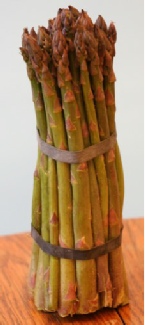
Asparagus is typically sold in banded bunches and is available year round at grocery stores since it is brought in from growers, shippers and packers in Peru, California, Washington State and Michigan. The U.S. regions known for large commercial asparagus operations grow green, purple and white varieties.
The Virginia Cooperative Extension suggests planting asparagus from the beginning of April to the end of May. Growers can plant seeds, transplants or dormant crowns.
When planting seeds, the Cooperative Extension in its “Specialty Crop Profile: Asparagus” explains that the seeds should be planted 1 ½ inches deep in soil with 10-12 seeds per foot with the rows being 24-30 inches apart.
Growers can also grow plants in peat pots or trays to transplant in eight to 12 weeks, the Cooperative Extension explains, but notes that for growers planting less than an acre, buying crowns to plant is less expensive.
“Asparagus is planted deep as compared to other crops,” the Cooperative Extension explains in “Specialty Crop Profile: Asparagus.” “Planting trenches are in rows that are five to six feet apart, and six to eight inches deep and wide. Both crowns and transplants are set into the trenches. The distance between rows may be increased, depending on the harvesting and field equipment to be used.”
Since asparagus requires a couple of years to maximize harvests, growers usually can pick their asparagus during the third year - however, the Cooperative Extension notes that in Southeastern Virginia, the second year of the asparagus crop’s growth can allow for some harvesting. Even harvesting of a few spears per plant is possible in the first year, it said.
Virginia’s asparagus season runs from mid-April through mid-June. Though a short season, asparagus can be planted in March and again later in the fall. Some growers in Suffolk and Southampton County begin harvesting their asparagus in mid-April.
Currently, Neil Drake of Grayson & Emma’s Garden Spot in Courtland has asparagus plants for sale for growers and gardeners wanting to plant some.
For more information on the demonstration or growing asparagus, contact local Janet Spencer or the Tidewater Agricultural Research & Extension Center at 757-657-6450.