Your source for fruit and vegetable news


By Bobbie Whitehead
Gardeners and growers interested in harvesting garlic for the early spring and summer may want to begin their fall planting.
Garlic, a relative of the onion, has served people for thousands of years as a food and medicine source.
Though garlic typically takes 100 to 120 days to mature for harvest, it can survive cold and freezing temperatures in the winter, especially the hardneck type. During the cold weather, the garlic rests dormant and will begin to sprout sometime before spring.
So if you plant your fall garlic now, which in Virginia means late September or October, your garlic cloves will remain dormant and will harden until they’re ready to sprout in the dead of winter.
To prepare the soil, use three pounds of 10-10-10 fertilizer per 100 square feet before planting, according to Diane Relf and Alan McDaniel, extension specialists for Virginia Tech in their “Onions, Garlic, and Shallots” article. Then, you’ll take your garlic that you’ve purchased or saved and plant individual cloves, which are used as the seed.
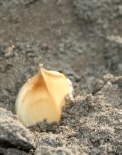
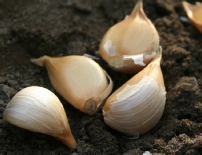
A farmer friend, Art Whitener has grown garlic for years and suggested in the past to place the pointed end of the garlic clove upward when planting. Also, Whitener has said to plant the flat side of the clove toward either side of the row, which prevents the garlic leaves from growing into the space between rows.
Plant the garlic cloves about three-to-four inches apart, one inch deep and space your rows about 12-to-24 inches apart, Relf and McDaniel suggest.
Once you’ve planted your garlic, water it, and in about a week or two, you can side dress the rows with two pounds of 10-10-10 fertilizer, Relf and McDaniel write.
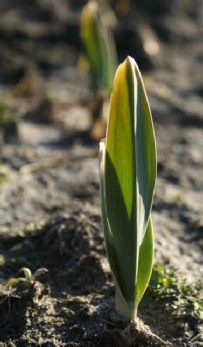
The garlic will begin to sprout in the early spring, or if you have a mild winter, the sprouting might occur at the end of the winter. The leaves will continue to grow tall, and after a few months, the garlic will be ready to harvest when the plant tops become dry. Relf and McDaniel note this occurs, in Virginia, usually around August. Again, if the winter was mild, the harvest date could be earlier in the summer months.
Just like onions, the Extension Service notes that garlic grows well in well-drained soil such as loam, and garlic can grow well in most home gardens.
If the soil isn’t properly drained, though, the garlic will rot and can face problems with thrips and root maggots, according to the state Extension Service.
Growers and gardeners, get ready to plant a fall garlic crop
Garlic cloves, above left, are used as seed. Placing the flat side of the clove,
above right, to either side of the row prevents the leaves from growing into the
spaces between rows.
Garlic cloves remain dormant in the winter temperatures and begin to sprout as spring
approaches. Left, a garlic plant in February 2009.
Save 10% now.
Use coupon code “Grower10.”